Chrome Extension Icon Generator
Create professional chrome extension icon generator icons with AI in seconds
No credit card required
Choose from multiple styles
Flat Design
Clean, professional aesthetic
Gradient
Eye-catching modern look
Glassmorphism
Frosted glass modern UI
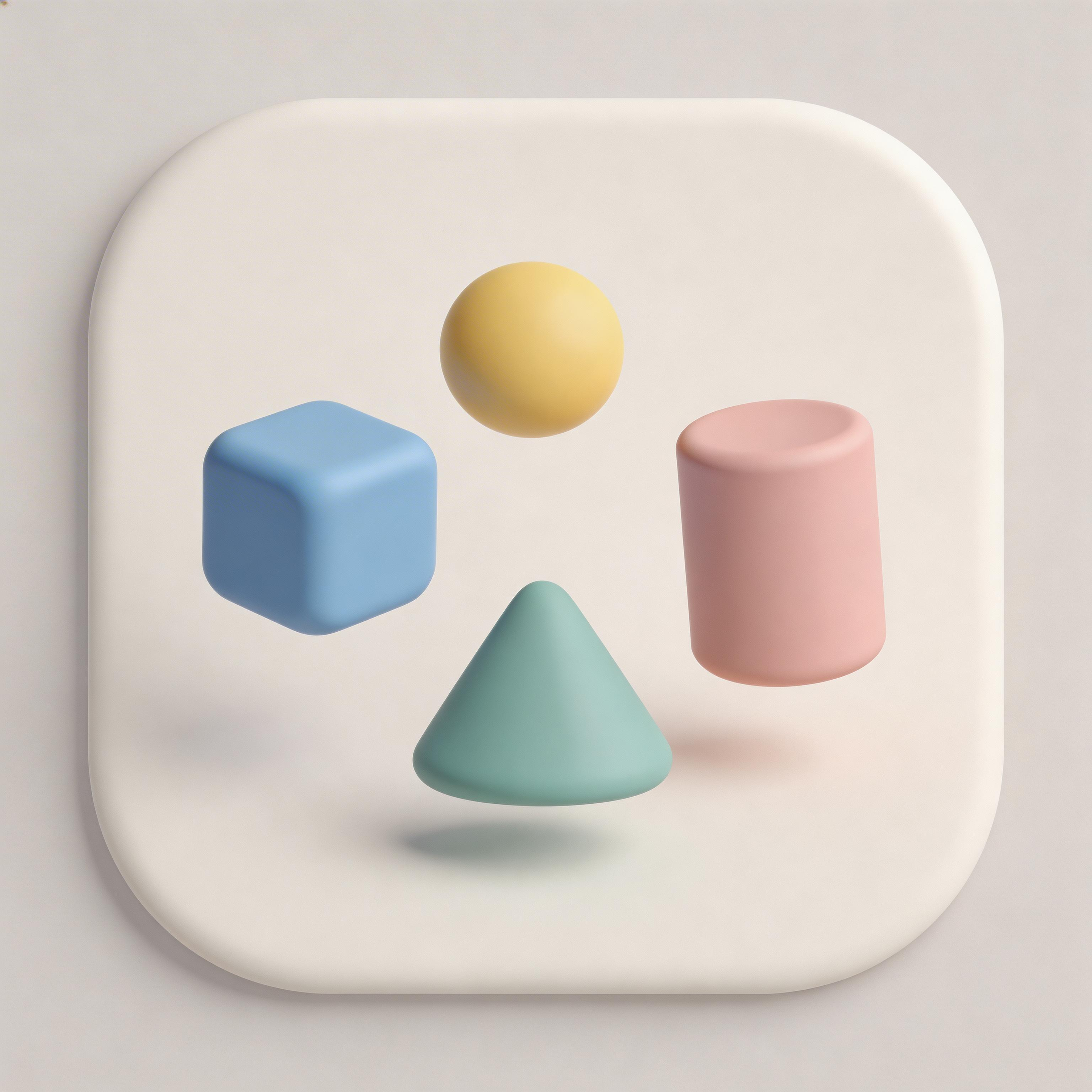
3D Rendered
Depth and realism
Minimalist
Simple and elegant
From idea to icon in seconds
Describe Your App
Tell the AI what your app does
Choose Style & Colors
Pick from optimized presets
Generate & Iterate
Create 2 variations instantly
Export & Ship
Download all sizes for every platform
Everything you need for perfect icons
Under 10 Seconds
Generate production-ready icons instantly
All Platforms
Export for iOS, Android, Apple Watch, and web
6 Style Presets
Flat, gradient, glassmorphism, 3D, minimalist
Category-Optimized
Designed for chrome extension icon generator apps
Frequently asked questions
16x16 (toolbar), 32x32 (Windows), 48x48 (extensions page), 128x128 (Web Store and installation dialog).
PNG only. Chrome also supports BMP, GIF, ICO, JPEG. SVG and WebP are NOT supported.
Use flat, simple shapes with 2-3 colors max. No gradients or fine details — they disappear at 16px.
Under the 'icons' key: {"16": "icon16.png", "48": "icon48.png", "128": "icon128.png"}.
96x96 content area within 128x128 canvas (16px transparent padding per side for the Web Store).
Ready to get started?
Chrome Extension Icon Generator: Create icon16, icon48 and icon128 with AI
A Chrome extension icon generator turns a text description into the three PNG files Manifest V3 asks for — icon16.png, icon48.png and icon128.png — plus the 32x32 toolbar variant Chrome uses on high-DPI displays. Describe your extension, pick a style, and export a 1024x1024 master you can size down to every slot in manifest.json.
Last updated: August 2026 | By IconikAI Team
Chrome Extension Icon Generator vs Icon Maker vs Logo Generator
These three phrases describe the same job with different words, and the tool you need is the same in each case. A Chrome extension icon generator creates the raster PNGs your manifest points at. A Chrome extension icon maker is the same thing with a friendlier name. A Chrome extension logo generator is what people search when they are thinking about brand mark first and file sizes second.
| What you searched | What you actually need | Where to start |
|---|---|---|
| Chrome extension icon generator | PNG set at 16, 32, 48, 128 | App Icon Generator |
| Chrome extensions icon generator | Same — plural is just phrasing | App Icon Generator |
| Chrome extension icon maker | Same — "maker" and "generator" are interchangeable | App Icon Generator |
| Chrome extension logo generator | A mark that survives being shown at 16px | App Logo Generator guide |
| Extension icon generator | Browser-agnostic; Chrome sizes cover Edge and Brave too | App Icon Generator |
| Chrome extension icon size | The size table below | App icon size chart |
A logo and an extension icon are not the same asset. A logo is built to be read on a website header at 200px wide. An extension icon has to be legible inside a 16-pixel square next to the address bar. If your logo has a wordmark, the extension icon should be the symbol from that logo with the words stripped out.
icon16.png, icon48.png and icon128.png: What Each File Is For
Chrome extensions conventionally ship three PNG files named icon16.png, icon48.png and icon128.png. The names are a convention, not a requirement — Chrome reads whatever paths you declare in manifest.json — but almost every tutorial and starter template uses them, which is why developers search for the filenames directly.
| File | Size | Where Chrome shows it |
|---|---|---|
icon16.png | 16x16 | Favicon on the extension's own pages, and the toolbar at 1x |
icon32.png | 32x32 | Toolbar on high-DPI (Retina) displays; also used on Windows |
icon48.png | 48x48 | The chrome://extensions management page |
icon128.png | 128x128 | Install dialog and the Chrome Web Store listing |
icon128.png is the one users judge you on before they install, because it is the image in the Web Store listing and the install prompt. icon16.png is the one they judge you on afterwards, because it is what sits in the toolbar for the life of the extension. Get both right; the two in the middle are mostly scaling insurance.
Chrome Extension Icon Size: Every Size Chrome Expects
The Chrome extension icon sizes you need are 16x16, 32x32, 48x48 and 128x128, all in PNG. Chrome will scale a larger image down if a size is missing, but browser downscaling is not sharp at 16px, so supply the small sizes explicitly rather than letting Chrome guess.
| Context | Size | Declared in manifest under | Notes |
|---|---|---|---|
| Toolbar (1x) | 16x16 | action.default_icon | The size that matters most day to day |
| Toolbar (2x / Retina) | 32x32 | action.default_icon | Blurry if you let Chrome upscale 16x16 |
| Extensions management page | 48x48 | icons | Shown at chrome://extensions |
| Install dialog + Web Store | 128x128 | icons | First impression; can carry more detail |
The manifest icon slots take raster images, not SVG. Chrome's documentation lists PNG as the recommended format and accepts several other raster formats alongside it; check the current extension docs if you need something other than PNG. In practice PNG with transparency is the safe default, since it sits on both light and dark browser chrome without a visible box around it.
How Do You Create a Chrome Extension Icon with AI?
Describe what the extension does, choose a style, generate, then export. Each generation takes under 10 seconds and returns a 1024x1024 master you can size down to the four slots your manifest declares.
- Describe the extension — "a tab organizer", "a password manager", "an ad blocker". Plain language; no prompt engineering.
- Pick a style — flat, 3D, gradient, glassmorphism, minimal and isometric are among 15+ curated styles. For a 16px toolbar slot, flat and minimal survive the downscale best.
- Generate — each generation costs 2 credits and returns 2 variants, so you can compare directions instead of committing to the first result.
- Refine in plain English — Chat-to-Edit lets you say "make the background darker" or "drop the outline" rather than reopening a design tool.
- Export — one-click export covers the standard platform size sets (iOS sizes, Android adaptive, web favicons). Chrome's 16/32/48/128 PNGs are straight downscales of the same 1024x1024 master.
Design for the smallest slot first. A mark that reads at 16x16 will always read at 128x128; the reverse is rarely true.
Designing for 16 Pixels: The Smallest Icon Challenge
A 16x16 canvas is roughly the height of 12pt Arial. You are designing something the size of a single character of text, which rules out most of what works at poster size.
- No thin lines — strokes under 2px at final size tend to disappear or alias into grey mush
- No fine detail — intricate patterns and small text become visual noise
- Avoid subtle gradients — soft transitions band and look muddy at 16px
- Silhouette test — fill your design with a single flat colour; if it is still recognisable, it will work in the toolbar
- High contrast — it has to hold up against both light and dark browser themes
The common failure is designing at 128x128 and shrinking. Sketch at 16x16 first, then scale up — the constraints only run one direction.
Manifest V3 Icon Configuration: manifest.json Example
Manifest V3 splits icons across two keys. The root icons object covers the install dialog, the Web Store and the extensions page. The action.default_icon object covers the toolbar button.
{
  "manifest_version": 3,
  "name": "My Extension",
  "icons": {
    "16": "images/icon16.png",
    "48": "images/icon48.png",
    "128": "images/icon128.png"
  },
  "action": {
    "default_title": "My Extension",
    "default_icon": {
      "16": "images/icon16.png",
      "32": "images/icon32.png"
    },
    "default_popup": "popup.html"
  }
}
Key points:
- The paths are relative to your extension root —
images/icon128.pngmeans a folder namedimagesnext tomanifest.json action.default_iconshould list both 16 and 32 so Retina toolbars get a native asset- Always set
default_title; it is the tooltip and the accessible name for screen readers - Keep the total icon payload small — Chrome does not publish a hard cap for these files, but a lean extension package is good practice regardless
Testing Your Chrome Extension Icon Before Publishing
- Load it unpacked — turn on Developer Mode at
chrome://extensionsand load the folder - Look at the toolbar at actual size — not zoomed in; the real test is peripheral recognition
- Switch themes — check it against both a light and a dark browser theme
- Check the 48px slot — the
chrome://extensionscard is where users go to remove things - Preview the Web Store listing — upload as a draft and look at
icon128.pngnext to competitors in search results - Ask someone else — show them the toolbar and ask what the extension does
Common Chrome Extension Icon Mistakes
Designing large and shrinking. The 16x16 ends up illegible. Design small first, scale up second.
Thin strokes and fine detail. Both vanish at toolbar size. Keep strokes at 2px minimum relative to the final render.
Too many colours. Two or three is plenty. More reads as noise once the icon is 16 pixels wide.
Letting Chrome upscale. Supplying only 16x16 and letting the browser generate 32x32 produces a soft icon on every Retina display.
Reusing the full logo. A wordmark at 16px is a grey smear. Use the symbol alone.
Frequently Asked Questions
What size is a Chrome extension icon?
Chrome extensions use 16x16, 32x32, 48x48 and 128x128 PNG icons. 16 and 32 go in action.default_icon for the toolbar, while 48 and 128 go in the root icons object for the extensions page, the install dialog and the Chrome Web Store listing.
What are icon16.png, icon48.png and icon128.png?
They are the conventional filenames for the three main Chrome extension icon sizes. icon16.png is the toolbar and favicon size, icon48.png appears on the chrome://extensions management page, and icon128.png is used in the install dialog and Web Store listing. The names are a convention — Chrome uses whatever paths your manifest.json declares.
Do I need icon32.png if I already have icon16.png?
It is worth adding. Chrome will upscale 16x16 for high-DPI displays, but an upscaled raster looks soft. Providing a native 32x32 keeps the toolbar button crisp on Retina and most modern laptop screens.
Can I use SVG for a Chrome extension icon?
No. The manifest icon slots expect raster files — PNG, JPEG or WebP. PNG with a transparent background is the usual choice because it sits cleanly on light and dark browser themes.
Is there a file size limit for Chrome extension icons?
Chrome does not publish a hard per-icon limit for manifest icons. Optimised PNGs at these sizes are small either way, so this is rarely the constraint — but keeping the overall extension package lean is still good practice.
Can I change my extension icon after publishing?
Yes. Upload a new package to the Chrome Web Store with the updated icon files and the listing refreshes once the update is processed. Review timelines vary by extension.
Is this Chrome extension icon generator free?
You can start generating without paying. Credits are pay-as-you-go with no subscription — plans run from $5 for 200 credits up to $50 for 4,000 credits, and each icon generation costs 2 credits and returns 2 variants.
Does the same icon work for Edge and Brave?
Largely, yes. Edge, Brave, Opera and other Chromium browsers use the same Manifest V3 icon slots and the same 16/32/48/128 sizes, so one set covers all of them. Each store has its own listing artwork requirements, which are separate from the manifest icons.
Create Your Chrome Extension Icon Now
Generate a Manifest V3-ready extension icon and export the sizes your manifest points at, in a few minutes rather than an afternoon.
Generate Your Extension Icon — Free
Working on other targets too? See the PWA icon generator for web app manifests, the Electron icon generator for desktop builds, the Windows icon generator, or the Next.js and React icon pages. For style direction, browse flat, minimalist and gradient presets, or read the app icon prompt guide.
Also shipping a mobile app? The App Screenshot Generator builds App Store and Google Play screenshots.